
What is keyword research and why is it important for SEO? This is one of the most common questions beginners ask when learning digital marketing. Have you ever wondered how businesses know what topics to write about or which products people are searching for online?
The answer is keyword research.
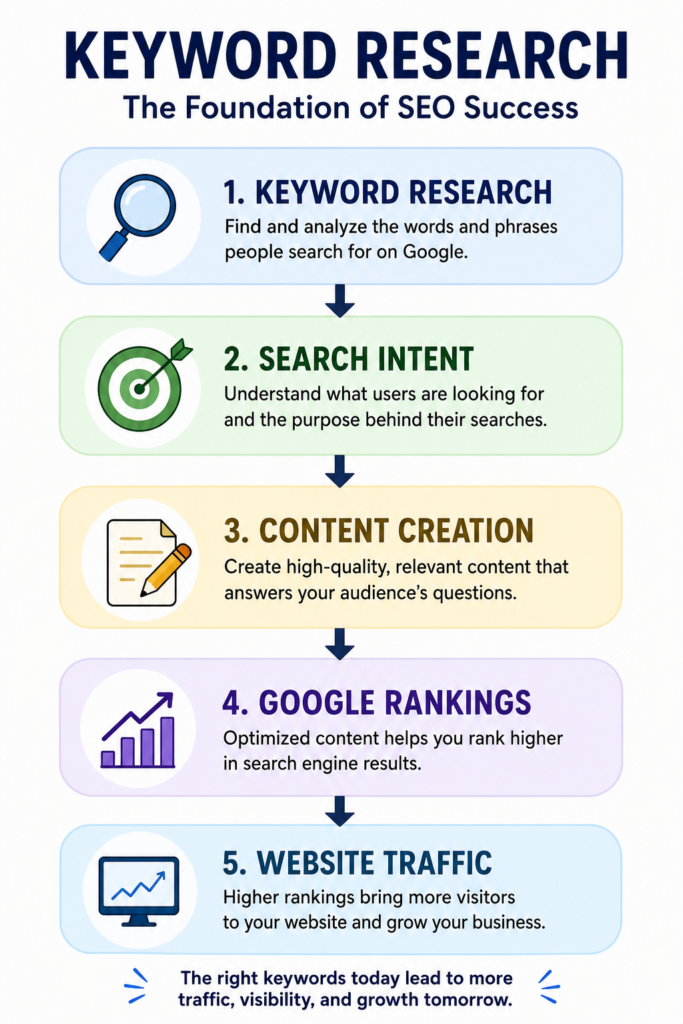
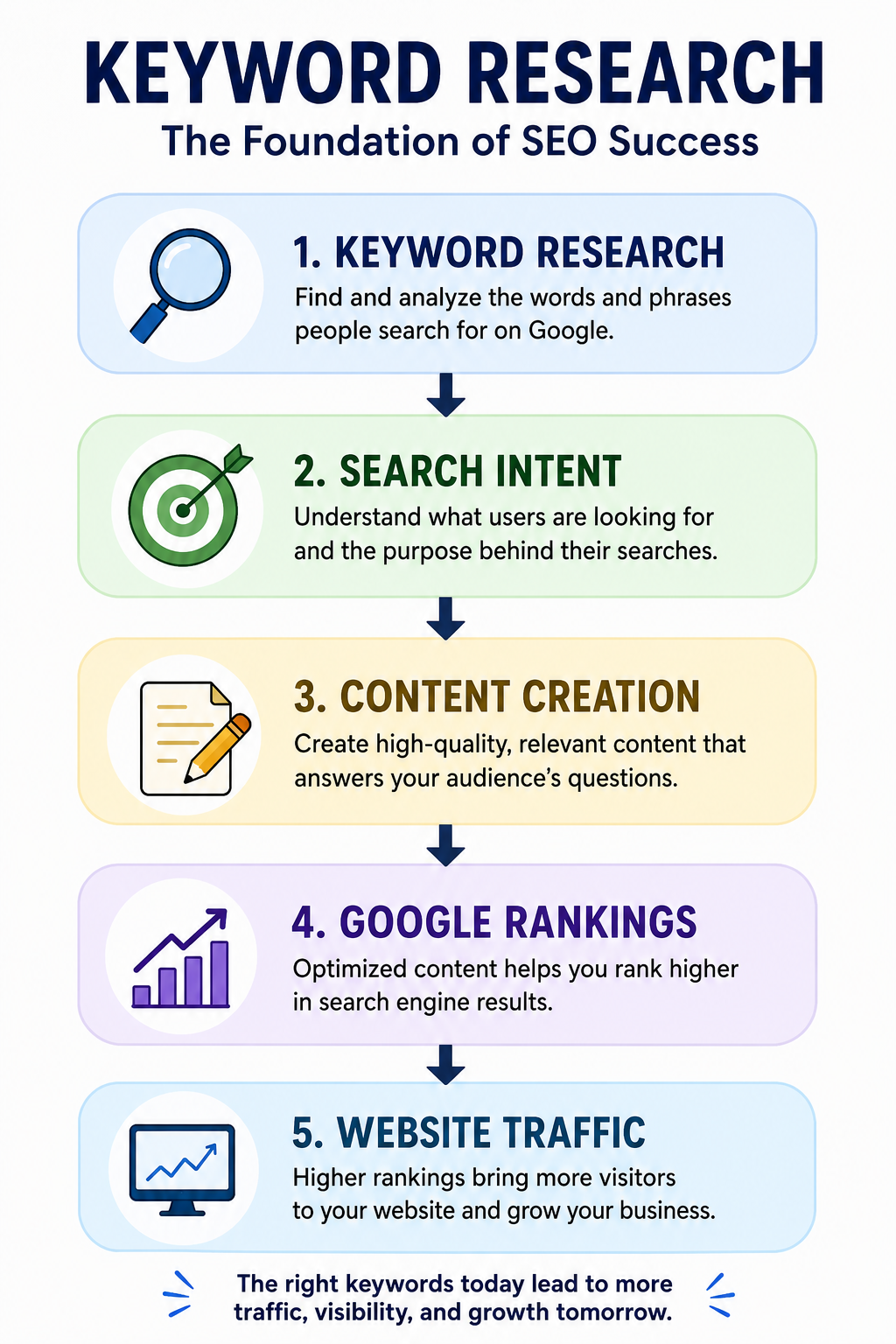
Keyword research is the process by which words and phrases that users search on search engines like Google are identified and analyzed. It is one of the most important parts of SEO because it helps businesses understand what their audience is looking for online.
Without keyword research, creating content becomes a guessing game. You may spend hours writing an article, but if nobody is searching for that topic, it is unlikely to generate traffic. Keyword research helps marketers find topics that have actual demand.
For example, suppose you sell fitness equipment. Instead of guessing what people are searching for, you may discover keywords such as “best home gym equipment”, “adjustable dumbbells”, “home workout equipment for small spaces”, or “cheap treadmill for apartment”. These keywords can then be used in blog articles, product pages, and advertisements.
Why Is Keyword Research Important for SEO?
1. Understanding Search Intent
Search intent refers to the reason behind a user’s search query. When someone types something into Google, they usually have a specific goal.
For example:
- “What is SEO?” – Looking for information.
- “Best SEO courses” – Comparing options.
- “Buy SEO course online” – Ready to make a purchase.
Understanding search intent helps businesses create content that matches what users are actually looking for.
2. Finding Content Ideas
Many beginners struggle with content creation because they don’t know what to write about. Keyword research solves this problem by showing what people are already searching for.
Instead of creating random content, you can focus on topics with proven demand.
3. Improving Website Traffic
When you create content around relevant keywords, your chances of appearing in search results increase. This can help bring more visitors to your website without relying entirely on paid advertising.
4. Understanding Your Audience
Keyword research also gives valuable insights into customer behavior. The keywords people search reveal their interests, problems, and needs.
This information can be useful for content creation, product development, and marketing strategies.
Types of Keywords
Short-Tail Keywords
These are broad keywords that usually contain one or two words.
Examples:
- SEO
- Marketing
- Fitness
They often have high search volume but also high competition.
Long-Tail Keywords
These are more specific search phrases containing three or more words.
Examples:
- What is keyword research
- Best digital marketing course for beginners
- Home workout equipment for small spaces
Long-tail keywords generally have lower competition and can be easier to rank for.
Informational Keywords
Users search these keywords when they want information.
Examples:
- What is SEO?
- How to do keyword research?
- Benefits of content marketing
Transactional Keywords
Users search these keywords when they are ready to take action.
Examples:
- Buy running shoes online
- SEO services near me
- Best laptop under ₹50,000
How to Do Keyword Research
The keyword research process can be broken down into simple steps:
Step 1: Identify Your Topic
Start with a broad topic related to your business or niche.
Example:
If your website is about digital marketing, your topic could be SEO, content marketing, social media marketing, or email marketing.
Step 2: Find Related Keywords
Use tools and Google search suggestions to discover related keywords.
You can also check:
- Google Autocomplete
- People Also Ask
- Related Searches
Step 3: Analyze Search Intent
Understand why people are searching for that keyword.
Ask yourself:
What information is the user looking for?
Step 4: Choose Relevant Keywords
Select keywords that are relevant to your audience and content goals.
Step 5: Create Helpful Content
Once you have identified the right keywords, create content that answers the user’s query in a clear and useful way. However, nowadays, impressions are not the endgame, you need engagement.
Popular Keyword Research Tools
Several tools can help with keyword research:
Even free tools like Google Autocomplete and People Also Ask can provide valuable keyword ideas.
Common Keyword Research Mistakes
Some common mistakes beginners make include:
- Targeting only high-volume keywords
- Ignoring search intent
- Choosing irrelevant keywords
- Stuffing keywords unnaturally into content
- Not analyzing competitors
Keyword research is not just about finding popular keywords. It is about finding the right keywords.
Conclusion
Keyword research is one of the foundations of SEO and content marketing. It helps businesses understand their audience, discover content opportunities, and improve their visibility on search engines.
Instead of guessing what people want, keyword research provides data-driven insights that help create content people are actively searching for. Whether you are a blogger, marketer, or business owner, learning keyword research can help you build a stronger online presence and attract the right audience.
What is keyword research in SEO?
Keyword research is the process of identifying and analyzing the words and phrases people use in search engines. It helps businesses create content that matches user searches and improves SEO performance.
Why is keyword research important?
Keyword research helps businesses understand their audience, discover content opportunities, improve search engine rankings, and attract relevant traffic to their website.
What is an example of a keyword?
If someone searches for “best smartphone under ₹20,000” or “how to lose weight naturally,” those search phrases are keywords.
Which tools can be used for keyword research?
Popular keyword research tools include Google Keyword Planner, Google Search Console, Ahrefs, Semrush, Moz Keyword Explorer, and Ubersuggest.
Is keyword research only important for SEO?
Is keyword research only important for SEO?
No. Keyword research is useful for SEO, content marketing, paid advertising, product research, and understanding customer behavior.