Introduction
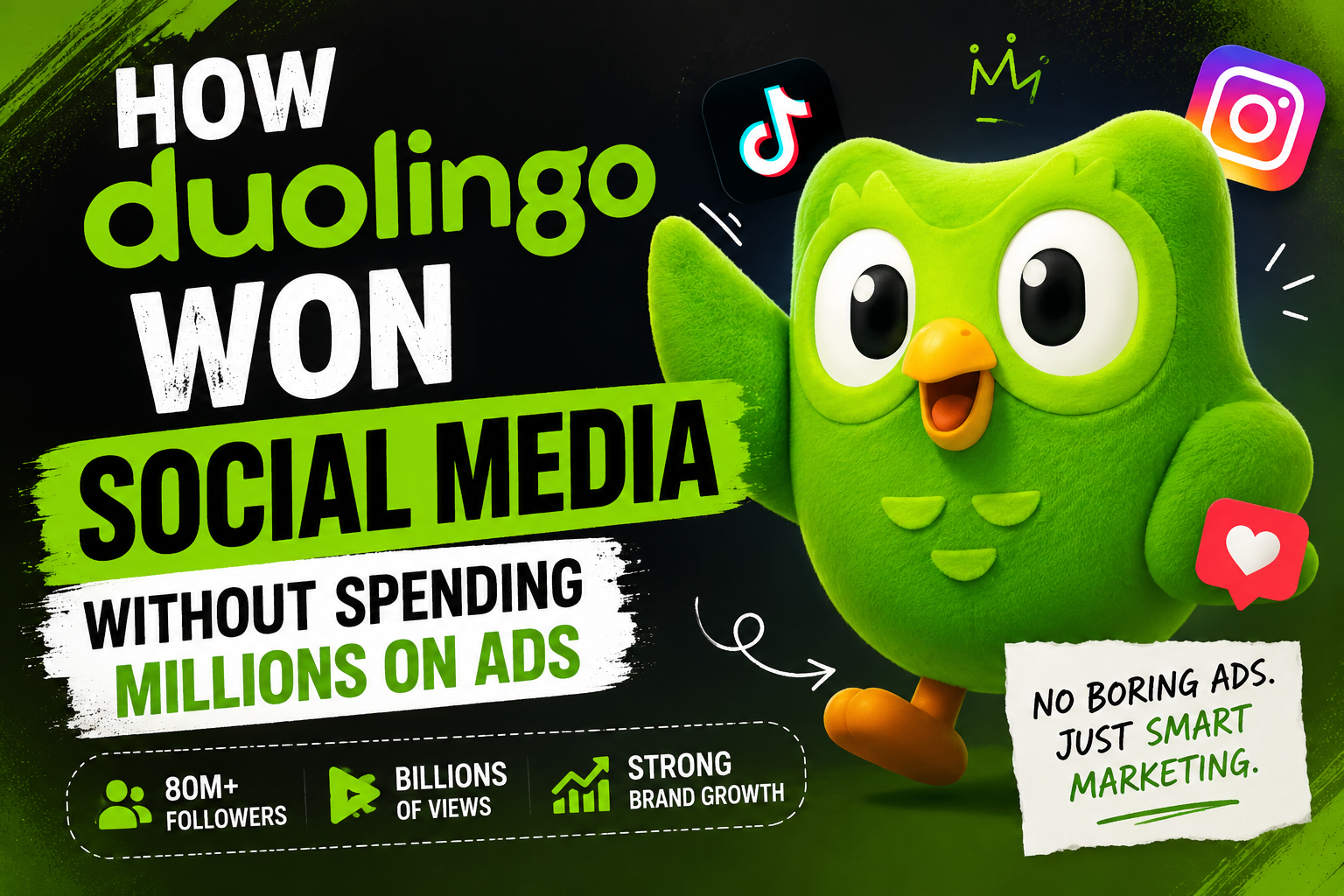
Duolingo marketing strategy has become one of the best examples of modern social media marketing. Instead of relying solely on expensive advertising campaigns, the language-learning app built a memorable brand personality that millions of people willingly engage with online.
When you think about brands that dominate social media, companies like Nike, Netflix, or Red Bull probably come to mind. But what if I told you that a language-learning app became one of the most talked-about brands on TikTok, Instagram, and YouTube Shorts without relying solely on massive advertising campaigns?
That’s exactly what Duolingo did. Instead of depending only on paid ads, Duolingo focused on creating content people genuinely wanted to watch and share. It stopped behaving like a traditional education company and started behaving like a content creator.
Today, Duolingo has built one of the strongest brand personalities on social media, proving that creativity and consistency can sometimes outperform large advertising budgets.
So, what can marketers learn from this strategy? Let’s break it down.
1. They Built a Character, Not Just a Logo
Most companies have a logo.
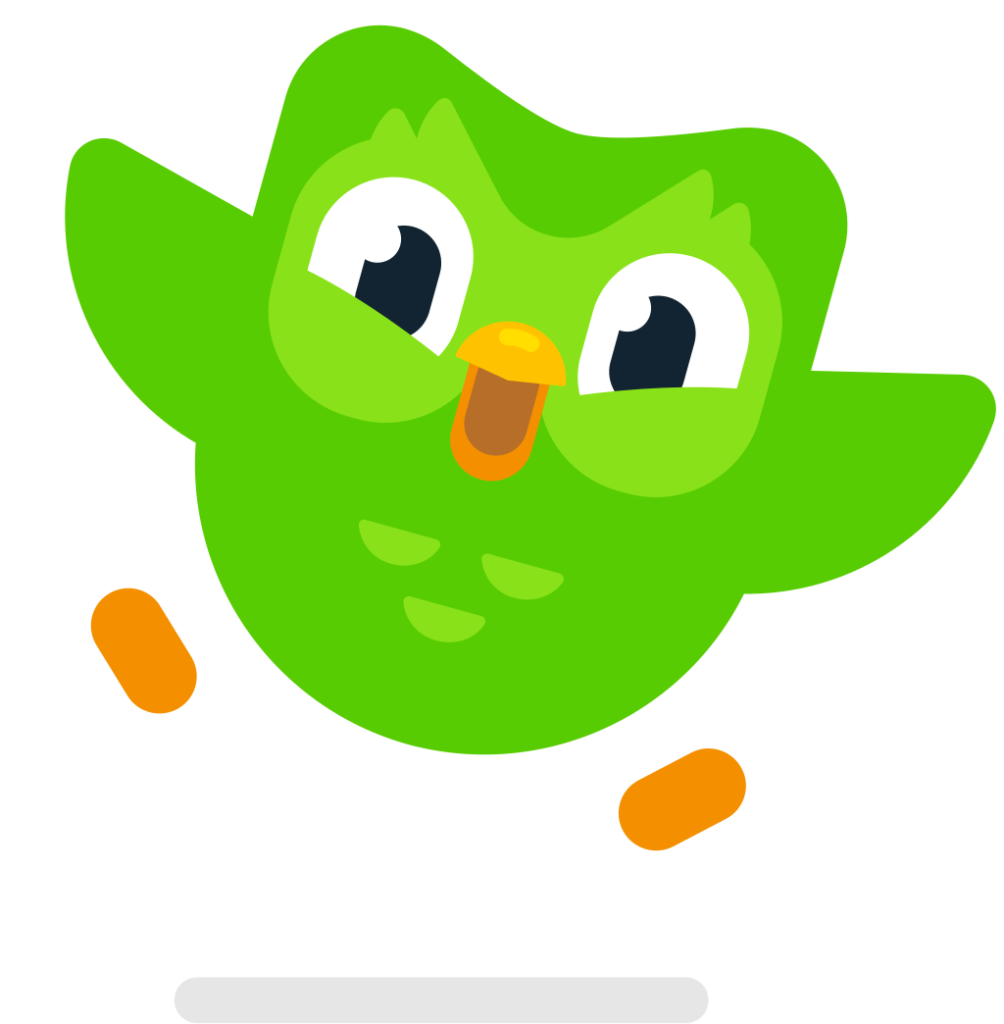
Duolingo has Duo.
And there’s a big difference.
Duo isn’t just a green owl sitting in the app icon. On social media, Duo has a personality. He’s funny, dramatic, slightly obsessive, and sometimes intentionally creepy.
People don’t follow Duolingo because they want another language lesson.
They follow Duo because they want to see what he’ll do next.
Marketing Lesson: People remember personalities more than logos.
2. Entertainment Came Before Promotion
Scroll through Duolingo’s TikTok page. You’ll notice something interesting. Most videos don’t ask you to download the app.
Instead, they’re filled with memes, trending sounds, office skits, and pop culture references. The marketing isn’t hidden.
It’s simply woven into the entertainment. People watch because they’re entertained first. The product naturally becomes part of the story instead of feeling like an advertisement.
That’s a huge mindset shift.
Instead of asking,
“How do we sell our product?”
Duolingo asks,
“How do we create content people actually enjoy watching?”
3. They Reacted Fast to Trends
Social media changes fast. A trend that’s popular today might disappear tomorrow. Duolingo understood this early. Instead of spending weeks getting approvals for every post, the social media team had enough freedom to react quickly.
Whether it was a trending meme, a celebrity moment, or a viral audio clip, Duolingo joined the conversation while people were still talking about it. On social media, being early is often more valuable than being perfect.
4. They Turned Comments into Content Ideas
One thing I found particularly interesting is that Duolingo doesn’t treat comments as simple feedback. It treats them as market research.
People joke about Duo.
They create memes.
They make suggestions.
Instead of ignoring those conversations, Duolingo turns many of those ideas into future content.
The audience doesn’t just consume the content.
They help shape it.
That’s one reason the brand continues to feel authentic and relevant.
5. Every Viral Campaign Had a Bigger Goal
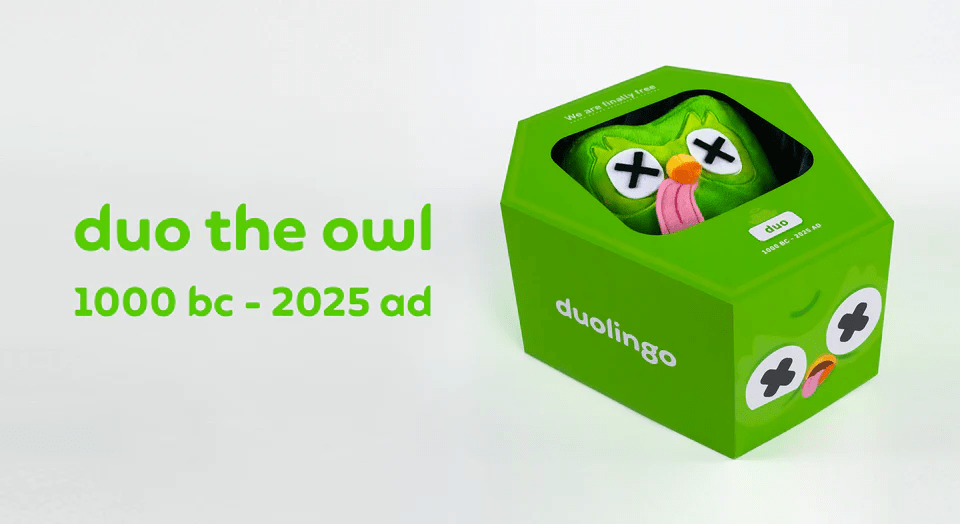
Remember when Duolingo announced that Duo had “died”?
Millions of people talked about it across social media.
At first, it looked like a random publicity stunt.
But it wasn’t.
The campaign reminded people about the app, encouraged inactive users to return, and generated massive engagement around the brand.
That’s an important lesson.
Virality is valuable.
But if it doesn’t support a business objective, it’s just temporary attention.
6. They Stayed Consistent Everywhere
Whether you visit TikTok, Instagram, YouTube Shorts, or X (formerly Twitter), Duolingo feels like the same brand.
The humor is consistent. The personality is consistent. The mascot is consistent. That consistency makes the brand instantly recognizable. Many companies completely change their tone across platforms. Duolingo doesn’t.
7. They Didn’t Copy Trends. They Adapted Them.
Many brands try too hard to look “cool.” The result often feels forced. Duolingo rarely copies trends directly.
Instead, it asks,
“How would Duo react to this trend?”
That simple question keeps every post aligned with the brand’s personality. The trend changes. The character doesn’t.
8. They Experiment Constantly
Not every Duolingo post becomes viral.
The company constantly experiments with:
- Different video formats
- Different jokes
- Different campaigns
- Different platforms
Instead of avoiding failure, Duolingo treats every experiment as a learning opportunity.
That’s how successful marketing evolves over time.
What Marketers Can Learn from the Duolingo Marketing Strategy
You don’t need Duolingo’s marketing budget to apply these lessons.
You can:
- Build a memorable brand personality.
- Create content people genuinely enjoy.
- Join relevant conversations quickly.
- Listen to your audience.
- Stay consistent across platforms.
- Measure business results, not just likes and views.
- Use social media to strengthen your brand, not simply to promote products.
Why the Duolingo Marketing Strategy Still Works
Many people believe Duolingo became famous because of memes.
I don’t think that’s the real reason.
The memes captured people’s attention.
The strategy kept them engaged.
Behind every funny video was a clear understanding of branding, storytelling, community building, and product marketing.
That’s why Duolingo isn’t just another viral brand.
It’s one of the best examples of modern social media marketing.
Frequently Asked Questions (FAQ)
Does Duolingo spend money on advertising?
Yes. Duolingo uses paid advertising alongside its organic marketing efforts. However, much of its social media success comes from engaging content that people willingly watch and share rather than relying only on paid ads.
Why is Duolingo’s marketing strategy so successful?
Duolingo combines a memorable brand personality, trend-driven content, community engagement, and consistent branding across platforms. Instead of constantly selling, it focuses on entertaining its audience.
What can small businesses learn from Duolingo?
Small businesses can build a recognizable brand voice, create valuable or entertaining content, respond quickly to trends that fit their identity, and use social media to build long-term relationships with customers instead of chasing short-term viral moments.
References
- Duolingo (official)
- Marketing Brew – How Duolingo Turns Social Stunts Into Long-Term Growth
- Influencer Marketing Hub – Duolingo Social Media Marketing Strategy
- Blankboard Studio – Duolingo Marketing Strategy